AI TOOL — FREE, NO SIGN-UP
Ingredient Decoder
Two ways to use it: paste the list exactly as printed on the label, or photograph the ingredient panel. The AI explains every one in plain language, without rating anything.
Cosmetics.com.AI does not sell the products you decode and receives no payment from brands for decoder results. Nothing you enter here is stored.
SEARCHABLE GLOSSARY
Ingredients A–Z
Look up any ingredient by INCI or common name. What it is, what it does, and what to know — in plain language.
Alcohol Denat.
activeDenatured alcohol · synthetic
A fast-evaporating alcohol that thins formulas and gives a weightless, quick-dry feel.
Can be drying at high concentrations.
Learn more (PubChem)Allantoin
activeAllantoin · synthetic
A soothing active that helps skin appear calm and comfortable.
Learn more (PubChem)Aloe Barbadensis (Aloe Vera) Leaf Juice
humectantAloe vera · plant
A hydrating gel from the aloe leaf that soothes the feel of skin.
Aqua
humectantWater · mineral
The water base of most formulas; nearly every other ingredient dissolves into it.
Often listed as Water/Eau.
Learn more (PubChem)Ascorbic Acid
antioxidantVitamin C · synthetic
Pure vitamin C, an antioxidant that helps skin appear brighter and supports the look of even tone.
Unstable in water; often packaged in dark or airless containers.
Learn more (PubChem)Avobenzone
UV filterAvobenzone · synthetic
A chemical filter that absorbs the full UVA range.
Unstable unless paired with stabilizers like octocrylene.
Learn more (PubChem)Azelaic Acid
exfoliantAzelaic acid · plant
A dicarboxylic acid that helps the appearance of even tone and calmer-looking skin.
Also used in hair-care for scalp appearance.
Learn more (PubChem)Bakuchiol
activeBakuchiol · plant
A plant alternative to retinoids, used for a smoother-looking finish with gentler feel.
Learn more (PubChem)Beeswax (Cera Alba)
thickenerBeeswax · animal-derived
A natural wax that thickens balms and forms a protective layer.
Butylene Glycol
humectantButylene glycol · synthetic
A lightweight humectant and solvent common in serums and toners.
Learn more (PubChem)Butyrospermum Parkii (Shea) Butter
emollientShea butter · plant
A rich plant butter that softens and conditions dry skin.
Caffeine
activeCaffeine · plant
An energizing active used to make the under-eye area appear less puffy.
Learn more (PubChem)Carbomer
thickenerCarbomer · synthetic
A synthetic polymer that thickens gels and suspends particles.
Learn more (PubChem)Carmine (CI 75470)
colorantCarmine · animal-derived
A red pigment from cochineal insects, used in lip and blush products.
Animal-derived; a known allergen for some people.
Centella Asiatica Extract
activeCentella asiatica · plant
A soothing botanical that helps skin appear calm and resilient.
Ceramides (NP, AP, EOP)
emollientCeramides · synthetic
Skin-identical lipids that help the moisture barrier appear intact and supple.
Cetearyl Alcohol
emollientCetearyl alcohol · plant
A fatty alcohol that thickens creams and softens skin; not a drying alcohol.
Fatty alcohol, unrelated to Alcohol Denat.
Learn more (PubChem)Citral
fragranceCitral · plant
A lemon-scented fragrance component found in lemongrass and citrus oils.
Declared allergen in the EU.
Learn more (PubChem)Cocamidopropyl Betaine
surfactantCocamidopropyl betaine · plant
A gentle coconut-derived surfactant that softens the harshness of other cleansers.
A known allergen for some people.
Learn more (PubChem)Cocos Nucifera (Coconut) Oil
emollientCoconut oil · plant
A rich plant oil used for deep conditioning in body and hair products.
Comedogenic potential noted in literature.
Learn more (PubChem)Cyclopentasiloxane
emollientCyclopentasiloxane · synthetic
A volatile silicone that gives a silky glide and evaporates after application.
Light, dry feel; used in primers and serums.
Learn more (PubChem)Dimethicone
emollientDimethicone · synthetic
A silicone that smooths the feel of the product and forms a light, breathable layer.
Learn more (PubChem)Ethylhexylglycerin
preservativeEthylhexylglycerin · synthetic
A deodorizing booster that also helps preservatives work more effectively.
Learn more (PubChem)Fragrance / Parfum
fragranceFragrance · synthetic
An umbrella term for any scent mixture; the exact components don't have to be listed.
A common trigger for sensitivity in some people.
Glycerin
humectantGlycerin · plant
A small molecule that attracts water to the skin and helps products spread smoothly.
Often plant-derived; one of the most used skincare ingredients.
Learn more (PubChem)Glycolic Acid
exfoliantGlycolic acid · synthetic
The smallest alpha-hydroxy acid; exfoliates the surface, helping skin appear brighter and more even.
Photosensitivity caution — use with SPF.
Learn more (PubChem)Homosalate
UV filterHomosalate · synthetic
A chemical UVB filter common in lightweight sunscreens.
EU has capped its maximum concentration.
Learn more (PubChem)Hyaluronic Acid / Sodium Hyaluronate
humectantHyaluronic acid · synthetic
A sugar-based molecule that binds large amounts of water, helping skin appear plump and hydrated.
Learn more (PubChem)Hydrolyzed Collagen
humectantHydrolyzed collagen · animal-derived
Broken-down collagen proteins that form a moisturizing film on the skin's surface.
Works on the surface; molecules are too large to penetrate deeply.
Iron Oxides (CI 77491, 77492, 77499)
colorantIron oxides · mineral
Mineral pigments that give foundation and concealer their skin tones.
Lactic Acid
exfoliantLactic acid · plant
An alpha-hydroxy acid from fermented milk that exfoliates gently and hydrates.
Learn more (PubChem)Lanolin
emollientLanolin · animal-derived
A wool-derived wax that softens and protects chapped skin.
A known allergen for some people.
Learn more (PubChem)Limonene
fragranceLimonene · plant
A citrus fragrance component; also used for its scent in natural formulas.
Declared allergen in the EU; oxidizes with air over time.
Learn more (PubChem)Linalool
fragranceLinalool · plant
A fragrance component found naturally in lavender and many essential oils.
Must be labeled separately in the EU as a declared allergen.
Learn more (PubChem)Mica
colorantMica · mineral
A mineral that adds shimmer and light diffusion to powders.
Learn more (PubChem)Niacinamide
activeNiacinamide · synthetic
A form of vitamin B3 used to support the appearance of even tone and refined pores.
Used at moderate concentrations in most formulas.
Learn more (PubChem)Octocrylene
UV filterOctocrylene · synthetic
A chemical UVB filter that also stabilizes avobenzone.
Learn more (PubChem)Oxybenzone (Benzophenone-3)
UV filterOxybenzone · synthetic
An older chemical UV filter; a known allergen for some people.
Restricted in Hawaii over environmental concerns.
Learn more (PubChem)PEG-40 Hydrogenated Castor Oil
surfactantPEG-40 hydrogenated castor oil · plant
A solubilizer that blends fragrances and oils into water-based products.
Palmitoyl Tripeptide-1 (Peptides)
activePeptides · synthetic
Short amino-acid chains used to support the appearance of firmer, smoother skin.
Panthenol
humectantPanthenol (pro-vitamin B5) · synthetic
A humectant that softens the feel of skin and hair.
Learn more (PubChem)Parabens (methylparaben, propylparaben)
preservativeParabens · synthetic
A family of long-used preservatives; specific esters are regulated with concentration caps.
Used at very low concentrations; permitted in the EU within limits.
Paraffinum Liquidum (Mineral Oil)
emollientMineral oil · mineral
A highly refined petroleum-derived oil; one of the most effective occlusive emollients.
Cosmetic grade is highly purified.
Learn more (PubChem)Petrolatum
emollientPetrolatum · mineral
A semi-solid hydrocarbon that seals in moisture exceptionally well.
Cosmetic grade is purified; a classic barrier ingredient.
Learn more (PubChem)Phenoxyethanol
preservativePhenoxyethanol · synthetic
A widely used preservative that keeps products free from microbial growth.
Typically used at low concentrations under 1%.
Learn more (PubChem)Polysorbate 20
surfactantPolysorbate 20 · plant
An emulsifier that helps oil and water phases stay blended.
Learn more (PubChem)Potassium Sorbate
preservativePotassium sorbate · synthetic
A mild preservative against mold and yeast, common in creams and lotions.
Learn more (PubChem)Propylene Glycol
humectantPropylene glycol · synthetic
A small humectant and solvent that carries actives through the formula.
Learn more (PubChem)Resveratrol
antioxidantResveratrol · plant
An antioxidant from grape skin studied for its appearance benefits.
Learn more (PubChem)Retinol
activeRetinol · synthetic
A vitamin A derivative widely used to reduce the look of fine lines and support skin renewal's appearance.
Can irritate some skin; photosensitivity caution — use with SPF as directed.
Learn more (PubChem)Retinyl Palmitate
activeRetinyl palmitate · synthetic
A gentler, fat-soluble vitamin A ester used in moisturizers for the look of smoother skin.
Learn more (PubChem)Salicylic Acid
exfoliantSalicylic acid · synthetic
A beta-hydroxy acid that exfoliates inside pores, helping skin appear clearer and smoother.
Used at low concentrations in cosmetics; aspirin-related.
Learn more (PubChem)Simmondsia Chinensis (Jojoba) Seed Oil
emollientJojoba oil · plant
A waxy plant oil whose composition is close to skin's own sebum.
Sodium Benzoate
preservativeSodium benzoate · synthetic
A food-grade preservative used in water-based cosmetics to prevent microbial growth.
Works best in slightly acidic formulas.
Learn more (PubChem)Sodium Laureth Sulfate
surfactantSodium laureth sulfate · synthetic
A milder relative of SLS, widely used in shampoos and body washes.
Learn more (PubChem)Sodium Lauryl Sulfate
surfactantSodium lauryl sulfate · synthetic
A strong anionic surfactant that creates a rich lather in cleansers.
Can be drying for some skin types.
Learn more (PubChem)Squalane
emollientSqualane · plant
A lightweight, skin-similar emollient that gives a soft, non-greasy feel.
Today usually plant-derived from olives or sugarcane.
Learn more (PubChem)Talc
thickenerTalc · mineral
A soft mineral powder that absorbs moisture and gives a silky slip to makeup.
Cosmetic talc is required to be asbestos-free in the US.
Learn more (PubChem)Titanium Dioxide
UV filterTitanium dioxide · mineral
A mineral UV filter against UVB and short UVA, also used as a white pigment.
Not used in spray products in the EU due to inhalation concerns.
Learn more (PubChem)Tocopherol
antioxidantVitamin E · plant
An antioxidant that protects oils in the formula from going rancid and conditions the skin.
Learn more (PubChem)Xanthan Gum
thickenerXanthan gum · plant
A fermented polysaccharide that thickens and stabilizes water-based gels.
Produced by fermentation.
Learn more (PubChem)Zinc Oxide
UV filterZinc oxide · mineral
A mineral UV filter that reflects and scatters both UVA and UVB light.
Can leave a white cast in high concentrations.
Learn more (PubChem)LABEL LITERACY
How to Read a Cosmetics Label
HYDRATING FACE CREAM1
Net Wt. 1.7 oz / 48 g2
Aqua, Glycerin, Cetearyl Alcohol, Dimethicone, Shea Butter, Niacinamide, Tocopherol, Parfum4, Phenoxyethanol, Sodium Hyaluronate. May contain (+/-): CI 77491, CI 77492, CI 774995
Ingredients listed in descending order of predominance3
Batch No. A2611C7
Distributed by Example Brand LLC, 100 Main St, Los Angeles, CA 90001, USA8
Made in USA9
For external use only. Avoid contact with eyes.10
- 1Product identity — exactly what it is.
- 2Net contents — how much is inside.
- 3Ingredient list in descending order (first 1% rule).
- 4"Fragrance/Parfum": an umbrella term that can bundle dozens of components.
- 5"May contain / +/-": possible colorants in color cosmetics.
- 6PAO symbol: months of use after opening.
- 7Batch code: manufacturing traceability.
- 8Responsible person address.
- 9Country of origin.
- 10Warning statements.
Descending order
The first few ingredients make up most of the product; anything after fragrance is usually under 1%.
"Clean," "natural," "non-toxic," "dermatologist-tested"
None of these terms has a legal definition in the US. They usually describe a brand's marketing position — not a verified standard. Ask the brand what testing it actually did.
'Fragrance-free' vs 'unscented'
Different things. Fragrance-free means no perfume was added; unscented can mean another ingredient was used to mask the product’s odor.
Cosmetic vs drug
A product that claims to treat a condition or change how the body works is regulated as a drug. Sunscreen, anti-dandruff shampoo, and acne treatments are drugs in the US; a moisturizer is a cosmetic. This is why brands say "reduces the look of wrinkles."
Hypoallergenic, non-comedogenic
No standard test is required to use these words. Ask the brand what testing they did — and what the results were.
Expiration
Many cosmetics don't carry a date. The PAO symbol and batch code are your guide. A change in smell, color, or texture is a sign something has changed.
US LONGEVITY LABORATORIES, INC.
Lab Support for Beauty Brands
Indie brands, contract manufacturers, and white-label lines need real data behind their products: stability, preservative performance, contaminants, and documentation that holds up under MoCRA. We provide testing, formulation support, and compliance guidance from an ISO/IEC 17025 laboratory environment in California. Scope and accreditation status are confirmed per project.

Testing
Sunscreen Ingredient Identity & Assay
Identity and assay work for UV filters listed on sunscreen labels.
Turnaround: 10–15 business days
accredited: no — confirmed per project
pH, Viscosity & Physical Characterization
Baseline physical characterization for spec sheets and batch records.
Turnaround: 3–5 business days
accredited: no — confirmed per project
Restricted Substances & Contaminant Screening (LC-MS/MS)
Screening for restricted substances and contaminants by LC-MS/MS.
Turnaround: 10–15 business days
accredited: no — confirmed per project
Heavy Metals (lead, arsenic, cadmium, mercury) by ICP-MS
Lead, arsenic, cadmium, and mercury quantification by ICP-MS.
Turnaround: 7–10 business days
accredited: no — confirmed per project
Microbial Limits
Microbial limits testing for finished products and raw materials.
Turnaround: 7–10 business days
accredited: no — confirmed per project
Preservative Efficacy (challenge testing)
Challenge testing that shows whether the preservative system holds up against repeated contamination.
Turnaround: 4–6 weeks
accredited: no — confirmed per project
Stability & Shelf-Life (accelerated and real-time)
Accelerated and real-time stability programs with physical and microbiological checkpoints.
Turnaround: 10–14 weeks (accelerated)
accredited: no — confirmed per project
Formulation
Batch Sample Verification
Independent verification that a production batch matches the intended formula.
Turnaround: By project
accredited: no — confirmed per project
Peptide, Collagen & Resveratrol Actives Development
Development support for peptide, collagen, and resveratrol active systems.
Turnaround: By project
accredited: no — confirmed per project
Reformulation for Simplified-Label or Fragrance-Free
Reformulation for simplified-label or fragrance-free positioning.
Turnaround: By project
accredited: no — confirmed per project
Custom Formulation R&D
Custom development from concept brief to pilot batch.
Turnaround: By project
accredited: no — confirmed per project
Compliance
Adverse Event Reporting Setup
Setup of adverse event intake, records, and serious adverse event reporting workflow.
Turnaround: By project
accredited: no — confirmed per project
Claims Review for Appearance-Only Language
Claims review to keep copy in appearance-only language.
Turnaround: 5–10 business days
accredited: no — confirmed per project
Ingredient & Label Review (US, EU, California Prop 65 screen)
Ingredient and label review for US, EU, and California Prop 65 screens.
Turnaround: 5–10 business days
accredited: no — confirmed per project
Safety Substantiation File Assembly
Assembly of safety substantiation documentation for your product portfolio.
Turnaround: By project
accredited: no — confirmed per project
MoCRA Readiness Review
Gap review of registrations, listings, safety files, and labeling against MoCRA.
Turnaround: 2–3 weeks
accredited: no — confirmed per project
Packaging & Labeling
Period-After-Opening & Batch Code Guidance
Guidance on period-after-open labeling and batch code design.
Turnaround: 2–4 business days
accredited: no — confirmed per project
INCI Name Verification
Verification of INCI names against the official dictionary.
Turnaround: 2–4 business days
accredited: no — confirmed per project
Label Copy Review
Line-by-line review of label copy for required elements.
Turnaround: 3–5 business days
accredited: no — confirmed per project
Who this is for
TikTok Shop and Amazon brands, salon and med-spa house lines, contract manufacturers in Southern California, white-label operators, and Latino- and Black-owned beauty startups.
Request a QuoteARTIFICIAL INTELLIGENCE
AI Work for the Cosmetics Industry
We build custom AI platforms for cosmetic brands and labs. Three examples of what AI can do for your company:
Ingredient Intelligence
We train AI on ingredient databases and regulations to decode any INCI list in seconds, in English and Spanish, with clear explanations of function and origin.
Compliance Copilot
AI tools that screen labels and claims against MoCRA and FDA rules, and flag appearance language before the product goes to market.
Marketing Content Engine
AI-generated product copy, descriptions, and educational material, written in English and Spanish, on-brand and free of medical claims.
THE PROCESS
How Testing Works
Tell us about the product
Category, formula stage, and target markets.
We propose a test plan and quote
Clear scope, methods, turnaround, and price.
Send samples to our California laboratory
Shipping coordinated with our team.
Receive a report you can put in your safety file
Documentation ready for your substantiation file.
Stability: what 'accelerated' means
Real-time testing holds products at room temperature for their intended life; accelerated testing holds them higher (often 40–45°C) to model aging faster. Passing accelerated stability is evidence — not a guarantee — of shelf life.
Why preservative challenge testing matters for water-based products
Any product with water can grow microbes. A challenge test deliberately introduces bacteria, yeast, and mold to show the preservative system can knock them back — the single most useful test for water-based formulas.
Heavy metals in color cosmetics: talc, mica, and iron oxides
Pigments start as minerals, and minerals can carry heavy metals. Lead, arsenic, cadmium, and mercury are quantified by ICP-MS against limits used by the FDA and several states.
What a Certificate of Analysis should contain
Product and batch identity, test methods, results, specs, and a pass/fail — signed by the lab. If a report has results but no method or spec, ask.
Turnaround times are shown per service in the table above and confirmed at quote.
US FEDERAL LAW
MoCRA in Plain Language
The Modernization of Cosmetics Regulation Act is the biggest change to US cosmetics law since 1938. Here's what a brand selling in the US now has to have.
Facility registration with FDA
Every facility that manufactures or processes cosmetics for US sale must register with the FDA.
Product listing
Each product and each formula variant must be listed, with ingredients.
Safety substantiation
Adequate evidence your product is safe as used, kept on file.
Adverse event records
Keep records of adverse events and report serious ones to the FDA within 15 business days.
Labeling
Responsible person contact on the label; fragrance allergen disclosure as rules finalize.
Good Manufacturing Practices
GMP record-keeping aligned with FDA expectations.
Small-business exemptions
Exemptions exist — but they do not apply to eye-area products, injectables, or certain claims. Check who does not qualify.
California extras
Prop 65 screening and the Toxic-Free Cosmetics Act ingredient bans.
Key dates
December 29, 2022
MoCRA is signed into law — the biggest update to US cosmetics law since 1938.
December 29, 2023
Statutory deadline for facility registration and product listing with the FDA.
2024–2025
FDA enforcement discretion while registration and listing systems stand up; brands should register in the meantime.
December 29, 2024
Statutory deadlines for GMP records, fragrance allergen disclosure, professional-use labeling, and eye-area labeling.
Ongoing
Serious adverse event reports must be submitted to the FDA within 15 business days of receiving them.
To be finalized
FDA rules on safety substantiation and GMP standards continue to finalize; dates on this page are updated as rules issue.
This is general information, not legal advice. Confirm requirements with a regulatory attorney or consultant.
MoCRA Readiness ReviewTHE NETWORK
The Cosmetics.com.AI Network
Specialized AI platforms for every part of the routine, each built for brands that want their own line without building their own lab.
Skin
Hair & Body
Ingredients
Science
FREQUENTLY ASKED
Frequently Asked Questions
BRAND & MANUFACTURER INQUIRY
Request a Quote
John D. Abravanel Berdugo
US Longevity Laboratories, Inc.
An Artificial Intelligence Longevity Research Corporation
FOR BRANDS, RETAILERS, CLINICS & INGREDIENT SUPPLIERS
Partner with Cosmetics.com.AI
One partner per category. Flat fee, fixed term, no per-click charges. Partners are labeled as partners and never influence decoder or chat results. Categories: ingredient suppliers, contract manufacturers, packaging, dermatology clinics, clean-beauty retailers, education.

Partners
Partner placements available — one per category.
Request Partnership Details
US LONGEVITY LABORATORIES, INC.
The Science Behind the Platform
US Longevity Laboratories, Inc. is an artificial intelligence longevity research corporation headquartered in Beverly Hills, California, with laboratory operations in Needles, California. Our team built and validated a state-licensed analytical laboratory from the ground up and now applies that experience to cosmetics testing, formulation, and longevity research.
ISO/IEC 17025 laboratory environment
We operate with the documentation and quality discipline of a 17025 environment; accreditation for specific methods is confirmed per project.
Chromatography and mass spectrometry
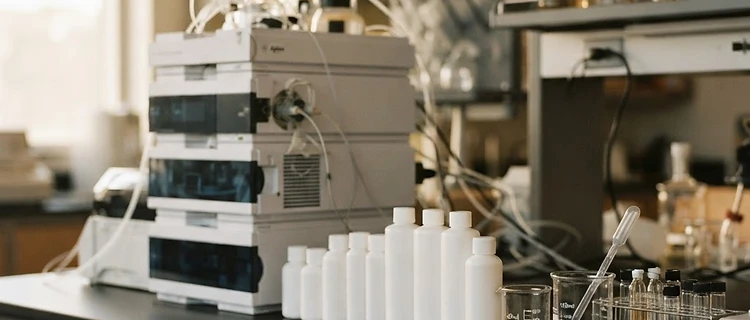
LC-MS/MS and ICP-MS for ingredient identity, assays, and trace-level contaminants.
Built in California
Headquartered in Beverly Hills, with laboratory operations in Needles, California.
GET IN TOUCH
Contact
For general questions, use the form below or email john@cosmetics.com.ai. For lab, brand, and partnership inquiries, call 323-359-5210.
We can't give medical advice about a reaction or condition. Please see a dermatologist.
Al Labrada
ADVISOR · BUSINESS DEVELOPMENT
#AlLabrada
Al Labrada is a retired law-enforcement officer of 31 years, retired with honor from the Los Angeles Police Department. He currently serves as an advisor and consultant for business development and professional standards.